





In an ongoing research partnership with The University of Melbourne, the Life Course Centre works closely with Tati Tati Kaiejin to develop evidence-based frameworks to examine the vital link between water rights, data governance and sovereignty, and community wellbeing to drive systemic legal, regulatory and policy reform.
Tati Tati Kaiejin (TTK) is an Indigenous-owned not-for-profit reconnecting First Nations peoples with waterways and Country. TTK focuses on cultural revitalisation, water rights and caring for Country, advocating for Indigenous leadership and Cultural Flows.

This body of work is lead by Associate Professor Brendan Kennedy (Tati Tati, Latji Latji, Wadi Wadi, Mutti Mutti, Yitha Yitha, and Nari Nari) at The University of Melbourne. Brendan is a dedicated advocate for Indigenous rights and cultural revitalisation, Brendan leads multi-disciplinary research exploring the vital connection between water and community wellbeing to drive legal, regulatory and policy reforms.

The projects
Indigenous Data Sovereignty
Indigenous Data Sovereignty at both priniciple and practice underpins the researth collaboration between TTK and the Life Course Centre, shifting the focus from data being a research tool to a cultural, strategic and economic asset owned and controlled by Tati Tati Traditional Owners.
Ownership and Control
All Intellectual Property (IP) and traditional knowledge captured during the research are retained for all time by the contributing Traditional Owners. The University of Melbourne must seek prior permission for any use of this knowledge beyond the agreed project scope. Furthermore, the Tati Tati community maintains publication approval rights, ensuring they control how their information is shared with the public.
Empowering Self-Determination
Data sovereignty is viewed as a mechanism to empower self-determination and self-governance. By controlling the data, the Tati Tati community can determine the narrative, decide what story is being told, and ensure that research priorities align with their own community needs rather than external academic interests.
Culturally Safe Methodology
Utilising Agent-Based Modelling and a synthetic population specifically to uphold IDS principles. This approach allows researchers to simulate community dynamics and test “what if” scenarios without requiring sensitive personal data from individual community members, thereby protecting privacy and cultural safety.
Building Community Capacity
A key goal of the projects is to build the technical capability of the Tati Tati community to archive, manage, and govern their own data for their own benefit. This ensures that the data remains a lasting resource for the community to design, deliver, and evaluate their own future programs.
Correcting Historical Narratives
IDS allows Community to tell a different story than what has been told in the past by settler-colonial frameworks, which have historically excluded Traditional Owner values from water management decisions.
Learn more
Journal Article
Media Article
Radio Show
The Tati Tati Cultural Mapping project
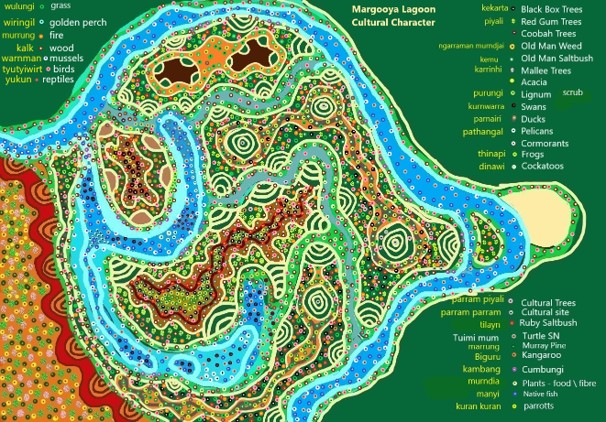
Cultural Mapping is a First Nations-led process of recording knowledge and relations to Country. The Tati Tati Cultural Mapping project records relationships to Tati Tati waterways and develops visualisations of Country. The project aims to deliver water on Country in ways that respects First Nations cultural-economic and environmental values, and promotes First Peoples leadership in Basin governance.
Project details
Timeframe: 2024–2026
Funding: Commonwealth Environmental Water Holder and Life Course Centre
Key Objectives

New mapping tools
Development and implementation of culturally adapted tools for First Nations

Generational connection
Documenting connection to the Millu (Murray River) over time

Interactive story maps
Visualising change over time for Community and policy
Research Team
Co-Chief Investigator
Co-Chief Investigator
Associate Investigator
Associate Investigator
Research Fellow
Research Fellow
Research Fellow

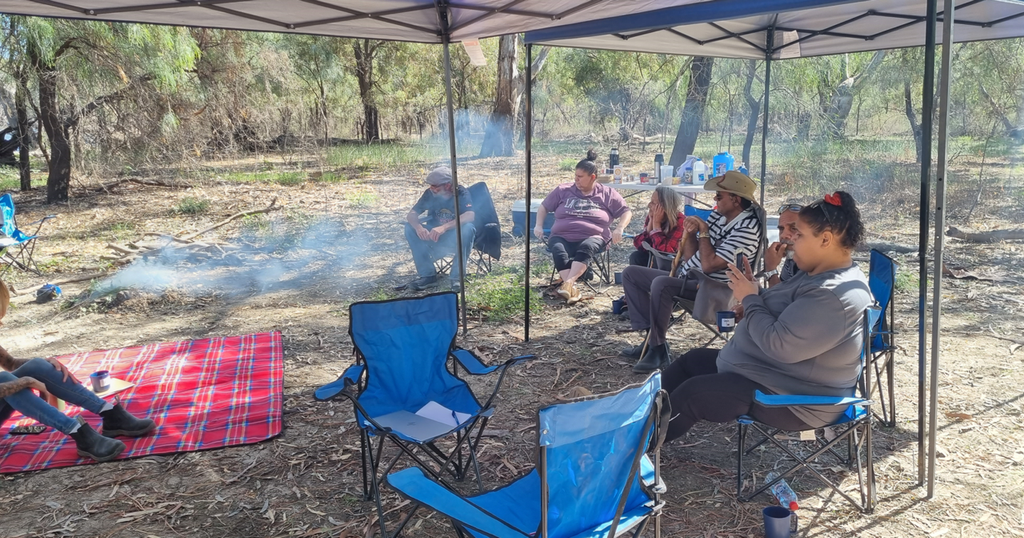
Brendan Kennedy (centre) explains the significance of this site known as ʻThe Cutʼ which is a section of the Millu overlooking Bumbang Island.
Pictured left to right: Dr. Simon Banks (CEWH), Uncle Ned Tapa, Uncle Stu Reweti, Jack Livingston (MDBA), Anthony Thompson (Whakauae Research Services)
Cultural map of Margooya Lagoon
Credit: Brendan Kennedy
Kulingi Kaiejin Ruwe: Modelling Tati Tati Cultural Economic Futures
This project asks questions about “what if water was returned to Tati Tati Peoples”? Based on community-led action research, this project translates Tati Tati aspirations and insights into future scenarios. The project describes how recognition of water rights and return of water improves health wellbeing and economic opportunities. We quantify long-term and intergenerational effects.
The research project was co-designed between Tati Tati Traditional Owners, The University of Melbourne and the Life Course Centre, involving First Nations knowledges, data science and geography.
Project details
Timeframe: 2023–2025
Funding: The University of Melbourne (Melbourne Social Equity Institute & The Faculty of Engineering and IT) and Life Course Centre
“What-If” Scenarios
(Water/Land Rights)

Agent-Based Model
Quantified Community Wellbeing Outcomes
Research Team
Who are “we” for purposes of the model?
A group of ten Tati Tati, different ages and life experience, volunteered to describe the key social demographics of the Traditional Owner group. From this a “population” was created to base the modelling on.
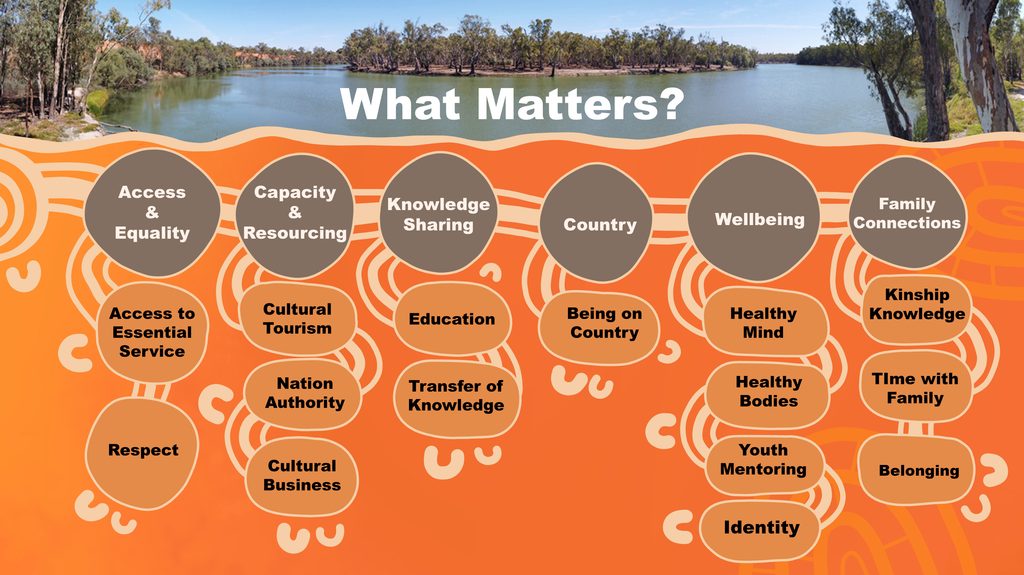
Tati Tati consultation illustration in response to:
What matters to Tati Tati? What fills our cultural economic waterways? What prevents flourisihing? What empties our waterholes and limits flow?
Jade Kennedy?
Healing People Country and Climate:
Cultural pathways for Change
This project involves Tati Tati co-codesigning culturally relevant evaluations to assess the significance of water for health and wellbeing in a climate changed world. This is a multi-institutional First Nations-led project that builds a stronger evidence base on First Nations health and climate resilience through case studies.Theresearch teamcomprises of leading First Nations and non-First Nations experts on health and wellbeing, and the environment.
Project details
Timeframe: 2025–2028
Funding: National Health and Medical Research Council (NHMRC) and the Life Course Centre
Research Team
Chief Investigator
Associate Investigator
Research Fellow
Aotearoa Collaboration: Tati Tati x Ngāti Hauiti
For both Māori and First Nations peoples of Australia, the degradation of water systems threatens food security, ceremonial practices, and the ability of people to live their lives on country, with the whenua, and carry out their roles as environmental stewards. This is a knowledge exchange between two First Peoples – Tati Tati Traditional Owners and Ngāti Hauiti of Aotearoa New Zealand – who protect and strengthen connections to their lands and waters in a changing climate.
In Aotearoa, Māori concepts of water as taonga (treasure) and the principle of kaitiakitanga (guardianship) are challenged by climate-induced changes to river flows, sedimentation, and erosion. Warming and acidification of both marine and freshwater environments damage food gathering places and cultivations, changing the life cycles of culturally significant taonga species to Ngāti Hauiti including tuna (eels), pātiki (flounder), and kākahi (freshwater mussels).
The project identifies the connections between the health and wellbeing of place and people, and the significance of water and cultural flows through the exchange of ideas, learnings, and challenges
Funded by the Indigenous Knowledges Institute at The University of Melbourne and the Life Course Centre

Waterway Governance
Examining Tati Tati and Ngati Hauiti approaches to access, control, and ownership of water, and the relationship to health and wellbeing.

Knowledge Exchange
Sharing stewardship and guardianship models between Tati Tati and Ngāti Hauiti.

Framework Development
Promoting Indigenous knowledge systems to measure the connection between healthy waterways and healthy people.
Research Team
The Whakauae team members involved in this project include the Director of Whakauae Dr Amohia Boulton, Senior Researcher Utiku Potaka, and Research Assistant Luke Enoka. Utiku and Luke also hold roles as Manu Taki (members) of Te Rūnanga o Ngāti Hauiti (the tribal council) and as knowledge holders.
Director of Whakauae
Senior Researcher
Research Assistant
