





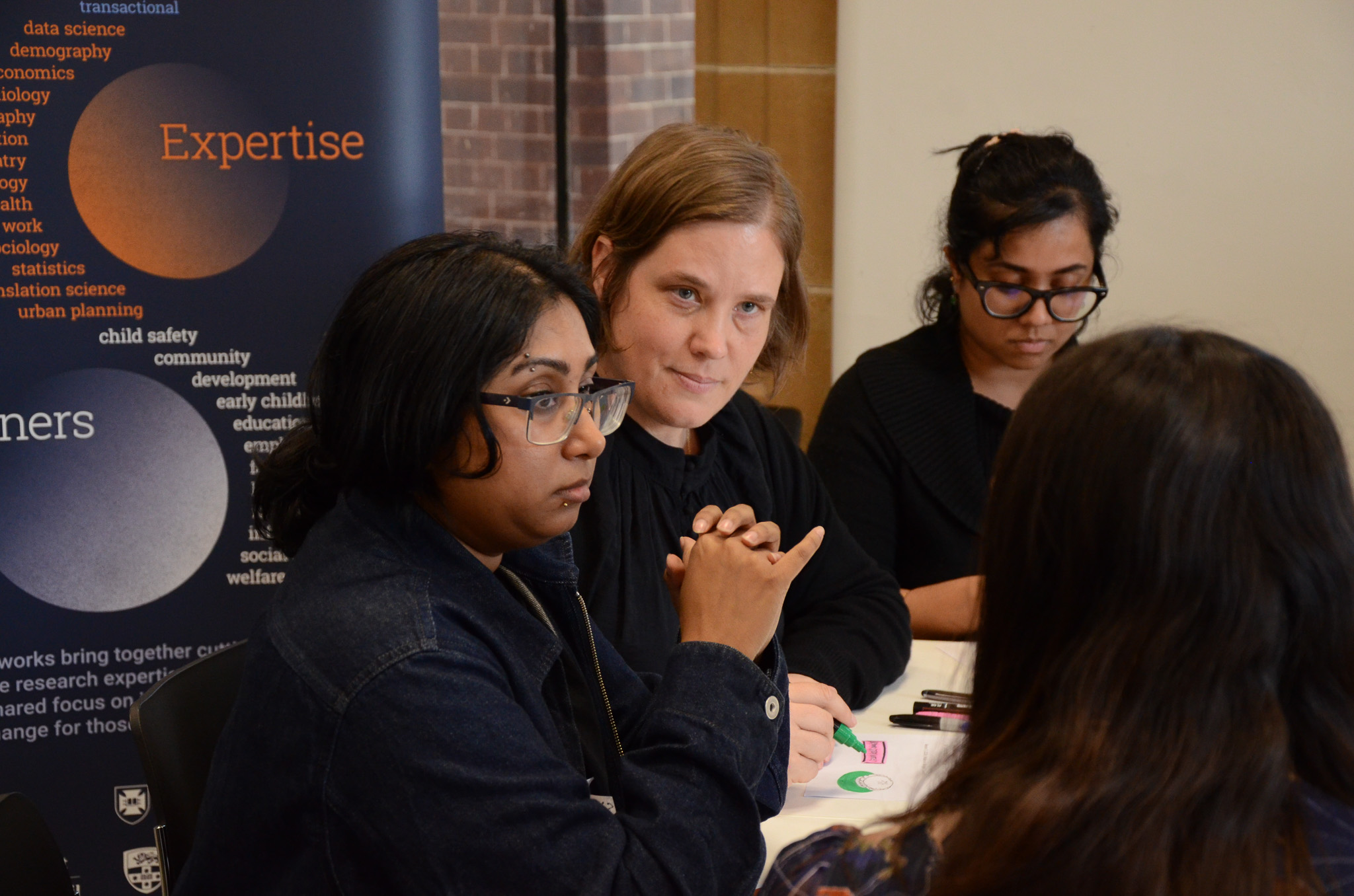
People experiencing deep and persistent disadvantage in Australia often struggle to have their voices heard. Various factors can affect their ability to participate in, or influence, decision-making that impacts their lives. The Life Course Centre identifies opportunities for those with lived experience to contribute to and help inform research projects through their expertise, thereby playing a role in helping to shape policy and decision-making.
The Life Course Centre formalised its commitment to involving the community by establishing its national Community Advisory Committee in late 2023. The Committee comprises members with lived experience of disadvantage as well as backgrounds in community, advocacy, and charity organisations. It was created to provide community perspectives on research activities across the Centre and strengthen connections between researchers and communities. In 2024, the Committee completed its first full year of providing strategic advice and enhancing new Life Course Centre research projects.
Community-informed research insights
While our community-informed projects are researcher-led, input from the community is essential for the research and enriches the findings. These valuable insights ensure that the voices and experiences of those directly engaged are reflected in our research outcomes, enabling researchers investigating disadvantage over the life course to better address challenges and inform more effective policies that drive meaningful change.
Early Childhood Education and Care
The Life Course Centre supported program, Play Active, involved educators, families, and policy makers in research investigating the physical activity of children aged birth to five years old. Previous studies by the research team had found the physical activity of children in early childhood education and care (ECEC) settings was declining due to sedentary routines and limited opportunities for active play. As physical activity is critical in early childhood to support physical health along with cognitive, emotional and psychosocial development, researchers worked closely with community members to identify barriers and ultimately design an evidence-based program to boost energetic play. Following the successful pilot study at Perth daycare centres, Play Active received government and non-government funding to scale up into a national program in 2024, which could eventually benefit more than 80,000 children at 700 childcare centres across Australia.

Childhood Wellbeing
Community-informed evidence has been vital for Life Course Centre researchers at The Kids Research Institute Australia, engaged to evaluate the effectiveness of the Early Years Partnership (EYP). The Partnership is a 10-year commitment by the Western Australian State Government Departments of Communities, Health and Education, and Minderoo Foundation to improve child wellbeing and school readiness across four communities experiencing socioeconomic disadvantage through a range of programs. In assessing the EYP’s Dental Health Project, which aims to address the issue of poor oral health, the research team assessed interviews and surveys conducted with parents, caregivers, and stakeholders. The experiences and insights provided by community members and those directly involved in the project have been invaluable in shaping the key findings and recommendations for the program, which could help improve the life-long development, health, and learning trajectories of young children in these communities.
Parenting Support
Centre research continued to underscore the importance of early intervention in shaping positive outcomes for children. The Every Family 2 Population Trial studied how evidence-based parenting programs are reflected in child maltreatment statistics in socially disadvantaged communities. The multi-year study involved delivering parenting programs to more than 5,000 families across Queensland and New South Wales. Parent surveys and administrative data were integral components of the research project. Findings showed that providing structured, accessible parenting support is associated with a 25% decrease in confirmed child maltreatment cases, along with reduced out-of-home care placements and parenting stress. This study provided insights into ways to reduce child maltreatment.

Energy Transition
The challenges faced by households transitioning from natural gas to electricity in Victoria were explored by Centre researchers in partnership with the Brotherhood of St Laurence. The team engaged directly with people experiencing energy hardship or living on lower incomes to inform research, gathering firsthand insights into the barriers and enabling factors affecting the switch to electricity as the power grid shifts towards renewable energy. These perspectives, collected through surveys and focus groups, provided a deeper understanding of the emerging divide and real-world impacts of the energy transition on disadvantaged communities. The findings were released in a joint report with the Brotherhood of St Laurence by the Victorian Government Minister for Climate Action and Energy and Resources. Further analysis by researchers shed light on the variety of needs of lower-income households seeking to electrify. These findings can help inform, design, and deliver tailored supports for those experiencing energy hardship, contributing to efforts to bridge the decarbonisation divide.
Community-involved research insights
Our community-involved research plays a vital role in ensuring research projects are relevant and responsive. The community actively participate and contribute to various stages of the research, enhancing the quality and applicability of our research. This collaborative approach recognises the deep knowledge people and organisations in the community provide, allowing for the exchange of information, experiences, and perspectives. By involving communities directly in the research process, researchers are better positioned to produce meaningful outcomes and contribute to policies and practices that support positive social change.
Youth Mental Health
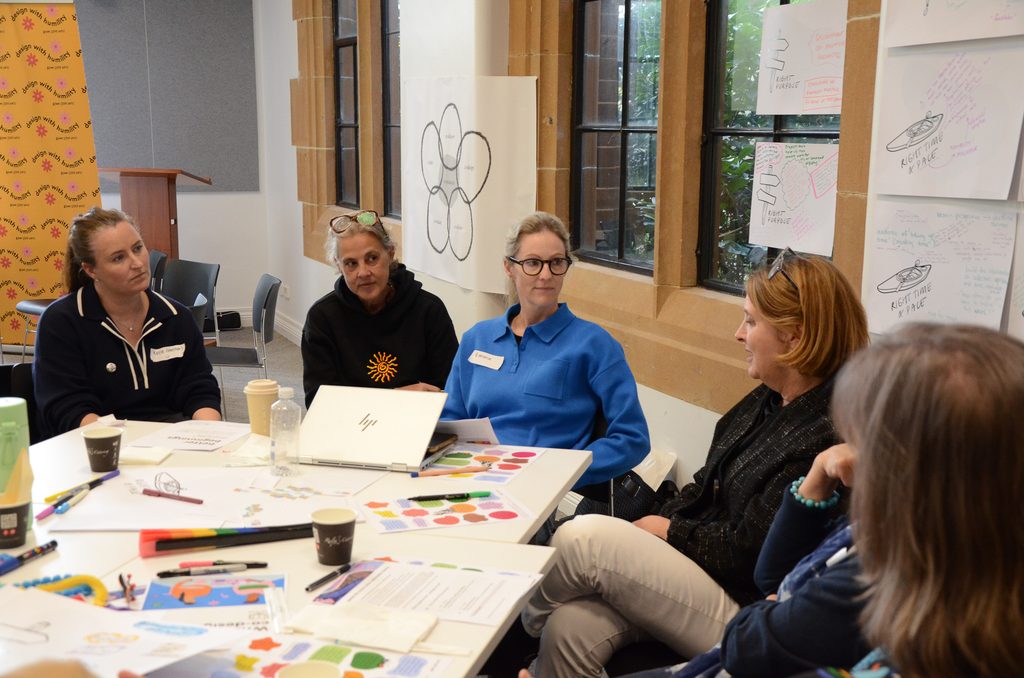
In July 2024, the Life Course Centre and Mission Australia brought together a mix of key people with lived experience, lived expertise, and professional experience for a two-day co-designing workshop. The objective was to examine how the Mission Australia Youth Survey’s inbuilt wellbeing risk of harm notifications provided a bridge to appropriate supports for young people. Through information sharing sessions and co-design activities, the group of researchers, youthsector industry partners, school representatives, and young people sought to understand what happens after the notifications are sent to schools, and capture experiences, thoughts, and opinions relating to the management of student wellbeing. By bringing together a diverse range of people with a shared vision, the workshop identified a list of high priority next steps for the project, including consultation with young people, their families, and teachers to develop best practice approaches, and a toolkit to support teachers.
Domestic Violence
The Life Course Centre’s research for the Survivor Experiences Report underscored the vital role of community input in addressing domestic violence. The Domestic Violence Action Centre (DVAC), which provides specialist services to survivors of gender-based violence in South-East Queensland, engaged our researchers to analyse their services. Working with DVAC staff, researchers conducted interviews with survivors who had engaged with DVAC’s support services. Their voices and experiences shaped the research outcomes. These insights provided valuable perspectives on the effectiveness of DVAC’s support services, highlighted areas for improvement, and informed policy recommendations. The research revealed that while DVAC’s services were highly beneficial, challenges like wait times and limited capacity underscored the need for sustained funding to expand support services and drive meaningful change. Following the release of the report, a public webinar was held to present the key findings and discuss insights and opportunities for further dialogue among researchers, policymakers, and community stakeholders, fostering a collaborative approach to addressing domestic violence.

Supported Housing
Community-involved research on the Keeping Families Together program placed the voices and experiences of families, practitioners, and stakeholders at the heart of the study to capture the true impact of the program. This research, conducted in partnership with Micah Projects and Common Ground Queensland over three years, initially investigated the outcomes of the 12-month pilot program to provide secure housing and multidisciplinary support for 20 at-risk families. The research team’s first evaluation in 2021 delivered evidence of the pilot program’s effectiveness, which played a role in the Keeping Families Together program receiving a four-year extension. In 2024, the research team delivered a second report which assessed the long-term impact of stable and supported housing on family outcomes. The research demonstrated that sustained access to safe, affordable housing significantly reduced the risk of homelessness and family separation. The Keeping Families Together research reinforced the value of collaborative research in the Centre’s approach to addressing complex social issues.
