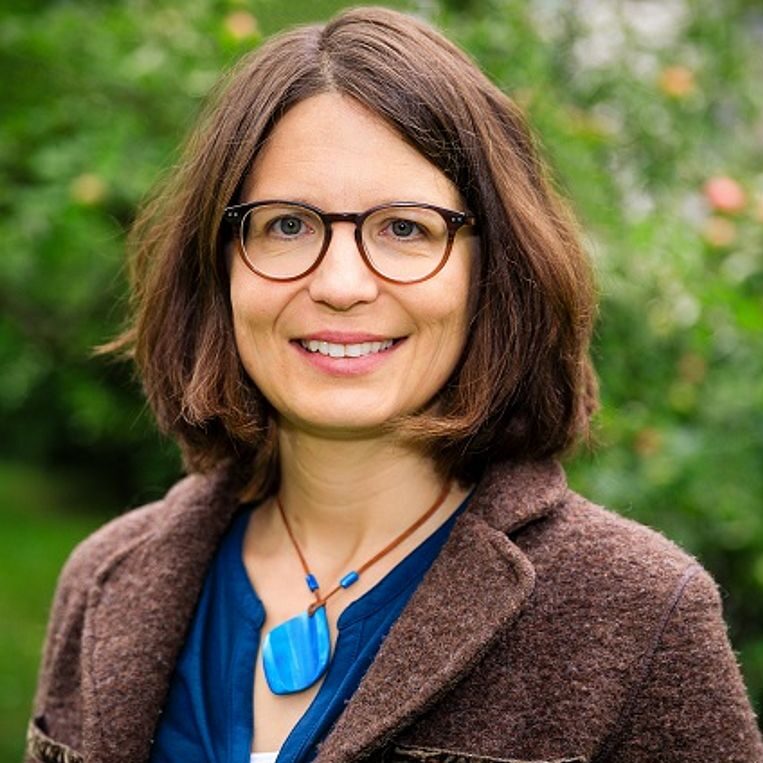
Destination Life Course Centre: visiting academic Professor Pia Schober
Destination Life Course Centre: visiting academic Professor Pia Schober
17 March 2026
Research visit to the Life Course Centre’s University of Queensland node sparks new ideas, research questions and possible collaborations.
Professor Pia Schober’s visit to Australia from the University of Tübingen was driven by a long-standing research connection.
“Over the past years, I have read many articles co-authored by Janeen Baxter, Francisco Perales and Sandra Buchler and found their work to be very closely related to my own research interests,” Professor Schober explained.
“In my research, I have explored gender inequalities across the life course with a focus on how family policies and cultural contexts shape gender and relationship beliefs as well as division of labour practices.
“Another strand of my research seeks to understand how gender norms and family policies impact mental health and subjective wellbeing.
“Currently, I am mostly working on a new project investigating gradational gender identification and relationships with changes in gender-related practices and mental wellbeing across the life course.”
With its strong research reputation and global reach, the Centre has become a sought-after destination for academic visits – supporting international collaboration, knowledge sharing and networking.
“Furthermore, academic visits encourage us to question many of the assumptions we routinely make about how we conduct research and collaborate by exposing us to different ways of thinking about and doing research,” Professor Schober added.
“I am extremely grateful that everyone at the Centre was so welcoming and made it very easy for me to join discussions about both work and leisure.”
It has been a valuable two-way exchange, with Professor Schober sharing her expertise with Centre researchers and students through presentations on several projects, including new research on gender identification across Europe and work examining how partnership and marriage beliefs shift over the life course.
Beyond knowledge sharing, the visit has sparked fresh thinking and opened up new directions for future research.
“I have started exploring possible research questions that would be interesting to examine from a comparative perspective in collaboration with Janeen,” Professor Schober explained.
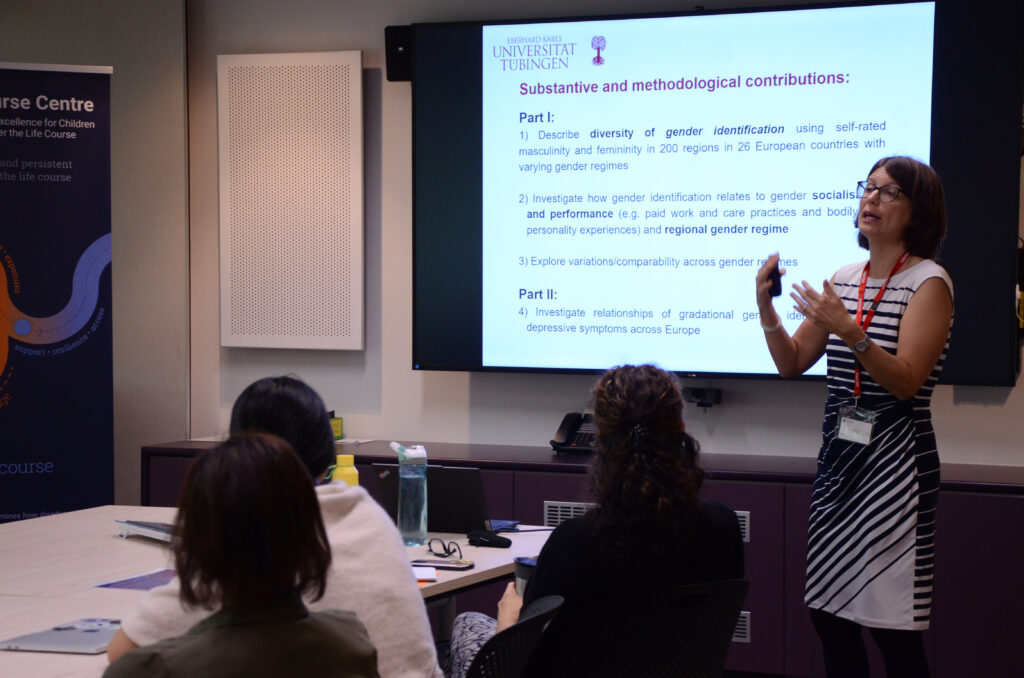
Professor Schober presenting her research to the Family Dynamics team in March.
“However, developing sound comparative research questions in our field usually takes time and requires a good understanding of the cultural and institutional context as a first step, which is where I particularly benefited from this research visit.”
Outside of the office, the experience has been just as memorable for Professor Schober and her family.
“We have come to love the beautiful beaches, including some surfing attempts with mixed results. We have also enjoyed many walks in rainforests with stunning scenery—and we’ve been fascinated by the animals that can be spotted almost everywhere, even in urban spaces across Brisbane,” she said.
“My teenage daughters loved it so much that they are determined to move here again later in their lives.”